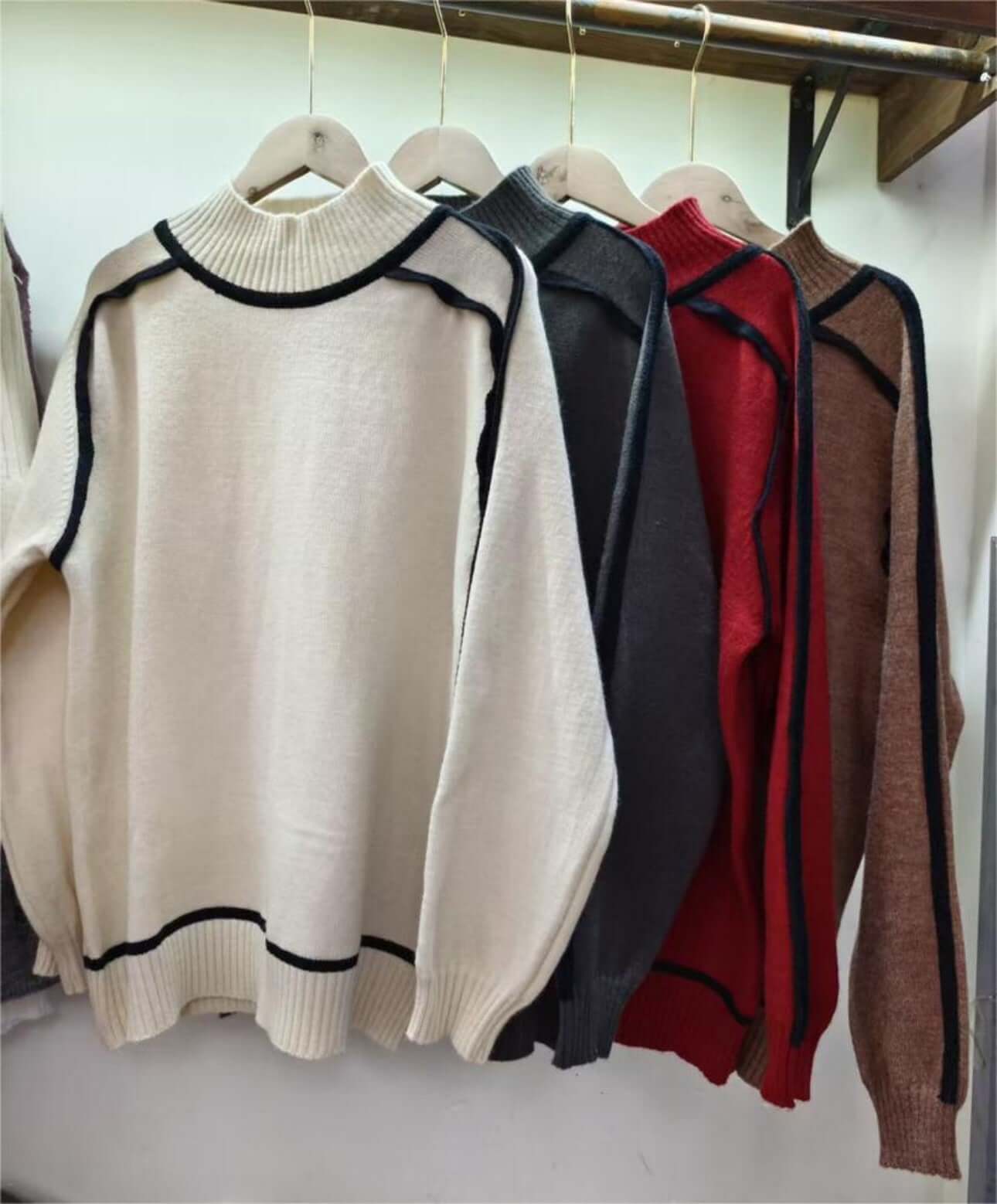
Women’s Contrast Seam Knit Sweater OEM/ODM
Women’s Contrast Seam Knit Sweater OEM/ODM
Women’s Contrast Seam Knit Sweater
Style Number: WBL-AW25140
This women’s contrast seam knit sweater combines a relaxed silhouette with a half-high mock neck and distinctive contrast seam detailing. The contrasting lines define the neckline, shoulder, sleeve and hem areas, creating a graphic construction detail for contemporary womenswear collections.
OEM/ODM development is available with customization covering viscose-cotton yarn, 7GG–9GG gauge, rib-knit structure, garment measurements, contrast seam colors, neckline proportions, labels and packaging.
Product Details
- Product: Women’s Contrast Seam Knit Sweater
- Style Number: WBL-AW25140
- Fit: Relaxed / Loose Fit
- Neckline: Half-High Mock Neck
- Knit Structure: Classic Rib Knit
- Knitting Gauge: Mid-Gauge 7GG–9GG
- Yarn: Viscose-Cotton Blend
- Reference Colors: Beige, Brown and Gray
- Detail: Contrast Seam / Piping Effect
- Custom MOQ: 100–200 pieces per style
- Customization: Yarn, gauge, body color, contrast color, sizing, neckline, labels and packaging
Final MOQ depends on yarn, color and customization requirements.
Viscose-Cotton Yarn & Mid-Gauge Development
Viscose-cotton blended yarn combines characteristics of both fibers and can be developed according to the required garment weight, drape, hand feel and surface appearance.
This sweater uses a 7GG–9GG mid-gauge rib-knit structure. The final appearance depends on the relationship between fiber composition, yarn count, knitting gauge, rib structure, stitch density and finishing.
For a relaxed silhouette with visible contrast detailing, the main knit structure and yarn should be evaluated together during sampling because changes in stretch, recovery or drape can also influence how the contrast lines sit on the finished garment.
Mock Neck & Relaxed Fit Development
The half-high mock neck and loose silhouette can be adjusted according to the buyer’s design direction and target size specifications.
Development options include:
- Mock-neck height and circumference
- Shoulder and armhole proportions
- Chest and body width
- Body and sleeve length
- Cuff and bottom hem dimensions
- Yarn composition and yarn count
- 7GG or 9GG construction
- Rib density and stretch
- Main body color
- Contrast seam color
- Size grading
- Main labels and care labels
- Hangtags and packaging
The neckline, shoulder construction and body proportions should be evaluated together to maintain the intended relaxed silhouette.
Contrast Seam & Piping Development
The contrast line is a key visual feature of this sweater and can be developed through different color combinations and placements according to the buyer’s design.
Options can include contrast detailing around the neckline, shoulder lines, sleeves and hem, subject to the selected garment construction.
Main body and contrast colors should be reviewed together using yarn cards or approved color references before sampling. The width and appearance of the contrast detail should also be confirmed on the physical sample rather than specified by color alone.
Why Contrast Seam Tension Matters in Knitwear
Contrast seams and piping-style details create visible lines across a flexible knitted structure. Their appearance therefore depends not only on placement and color but also on the relationship between seam tension, knit stretch, rib density, yarn properties and garment dimensions.
If the contrast construction is too tight relative to the knitted body, it can pull the surrounding fabric and create puckering or unwanted distortion. If the tension is too loose, the contrast line may lose definition or appear uneven.
This becomes especially important where the contrast detail follows curved or directional areas such as the neckline and shoulder.
During sampling, the contrast line width, tension, alignment and interaction with the rib-knit body should therefore be checked together to confirm a clean appearance without restricting the intended stretch and drape of the sweater.
Color, Fit & Private Label Customization
Beige, brown and gray can be used as reference body colors, while alternative body and contrast combinations can be developed according to available yarn cards and project requirements.
The relaxed fit can also be adjusted through chest width, shoulder proportions, body length and sleeve measurements according to the buyer’s tech pack, reference garment or target size chart.
Private-label options can include custom woven labels, care labels, hangtags and packaging.
Sampling & Quality Control
A development sample is recommended before bulk production to confirm:
- Yarn and body color
- 7GG or 9GG gauge
- Rib-knit structure
- Garment measurements and relaxed fit
- Mock-neck dimensions
- Contrast color and placement
- Contrast seam width and tension
- Labels and packaging
Quality control is based on the approved sample and buyer specifications. Inspection points can include garment measurements, knit consistency, neckline symmetry, contrast-line alignment, seam appearance, linking and seams, finishing and branding details.
Develop Your Custom Contrast Seam Sweater
For OEM/ODM development, please provide your tech pack or reference design, target yarn, body and contrast colors, size range, contrast-detail requirements, order quantity and target delivery date.
Physical yarn cards can be provided for suitable projects to support yarn and color selection before sampling.
Viscose Cotton Blend
Viscose Cotton Blend
Mid-Gauge (7GG - 9GG)
Mid-Gauge (7GG - 9GG)
Classic Rib-Knit Technique
Classic Rib-Knit Technique